The Chick-fil-A test
Monday night the council took no vote on the $12,500 downtown hotel market study. Nobody at the table supported paying for it from the general fund, and Council Member Don Etherly offered to put it on the agenda of the A&P Commission instead 0:58:38. I serve on that commission. So before the proposal gets there, I want to explain how I think about it — with a story about a chicken sandwich. The complete record of Monday's meeting is published here, every quote playing the city's own video.
First, the disclosure
I own and operate the Edwardian Inn, the only operating bed and breakfast in Helena. I pay the A&P hospitality tax on every room I rent, and I serve on the A&P commission — state law reserves seats on that commission for people who run hotels and restaurants, on the theory that the people who pay the tax should help decide how it is spent. A new hotel downtown would compete with my business. Weigh everything below knowing that. The afternoon of the meeting I published seventeen years of my own occupancy data so the council could see the market numbers without paying anyone for them.
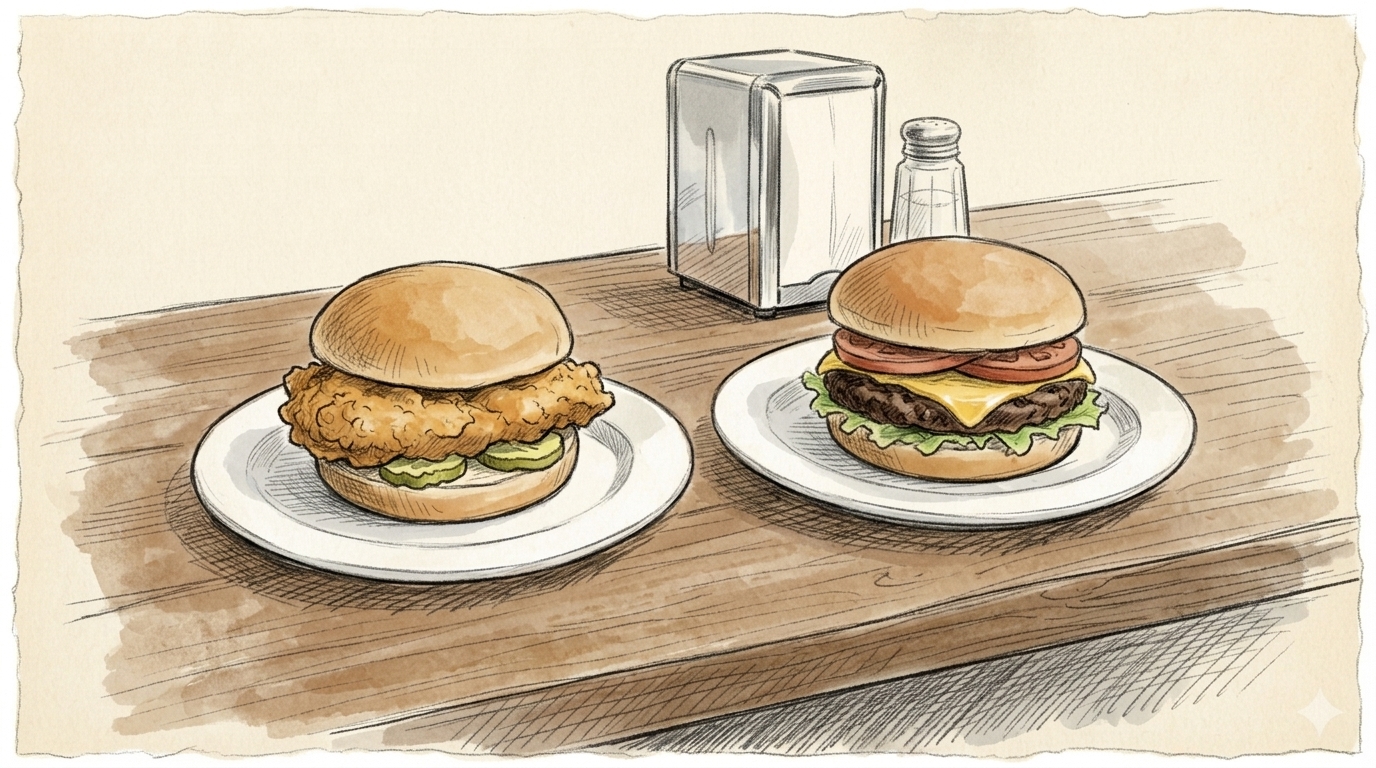
A parable
Imagine that I really like Chick-fil-A. I think my guests would like it too. So I go to the A&P director and I say: I like Chick-fil-A, and I want to try to bring one to Helena. And she says, "That's a great idea. I love Chick-fil-A. We should absolutely do that."
So we call up Chick-fil-A and say, "We want you to come to Helena." Chick-fil-A says, "We might be interested. But before we can put in a location, what we really need is a feasibility study to see if there would be sufficient demand for a franchise in your city. You all have money at A&P. How about you go to your commission and fund a study, and then we can talk more."
So we find a firm that can do the study. The price comes back: $13,000. And we bring it to the commission. "Commission, we want to fund a feasibility study for potentially bringing a new restaurant to our city."
The manager of a local restaurant sits on the commission too. And he says: "I heard you're doing this study because you want to bring a Chick-fil-A to town. You know a Chick-fil-A setting up across the street from me would hurt my business."
And we say: "No, no — see, Chick-fil-A sells chicken sandwiches, and you sell burgers, so they're really two different things. People who like chicken sandwiches don't really like burgers. This wouldn't hurt your business at all."
And the restaurant owner says: "I may have been born at night, but I wasn't born last night. Chicken sandwiches and burgers are both lunch. They are direct substitutes. If someone buys a chicken sandwich from Chick-fil-A, they are not buying a burger, because people eat one lunch at a time. This would absolutely affect local restaurants.
"But I tell you what. If you want to spend $13,000 to help bring Chick-fil-A into the area, let's do it — but let's make it fair. Give each of the local restaurants $13,000 too, so we're all even. That seems fair to me."
The A&P director and I look at each other, and she answers: "That's actually not legal. We can't give public money directly to one business. We're not allowed to do that."
And the restaurant owner says: "You made my point for me. If Chick-fil-A wants to set up across the street from me, we should not be using public money to help them do it. They can spend their own money on their own research and make that decision for themselves. And if you personally really like Chick-fil-A — you can fund a study for them out of your own pocket. Or apply to open your own franchise. Nothing is stopping you, and I welcome a free market in my town. What I oppose is preferential treatment for potential new entrants into our market when there is no such support for the businesses already here."
What the parable is saying — and what it isn't
The director's line in the story is real law. Article 12, § 5 of the Arkansas constitution forbids any city from appropriating public money for a private corporation, association, or individual. The Attorney General has applied that rule to hospitality-tax money specifically, answering this exact question — may an A&P commission spend its funds advertising privately owned museums, hotels, motels, and attractions? — in Opinion No. 2008-121: A&P funds may promote the city as a whole, even when private businesses benefit along the way, but the constitution "flatly forbids any local governmental entity to gratuitously contribute funds to a private entity" — a rule the Attorney General's office has restated since at least 1988. And the case that anchors it is from Helena: Halbert v. Helena-West Helena Industrial Development Corp., 226 Ark. 620 (1956), where the Arkansas Supreme Court held that a municipality may not contribute public funds to a private corporation even when the corporation serves a public purpose.
To be precise about what that means here: a market study of the whole downtown is probably legal. Promoting the city at large is what A&P money is for, and a study arguably does that even though private businesses would benefit. My argument is not that the city cannot fund this study. My argument is that it should not — because the study's own stated purpose is to recruit a specific future business, and the restaurant owner's test is the right one: if it would be illegal to even the scales afterward, think hard before tipping them.
The proposal on the table is not a neutral census of the market. Its first sentence says the city is "desirous of attracting a developer to construct a new hotel," and the mayor told the council Monday that the idea began with a call he and his chief of staff made to a Marriott representative 0:36:08. Under the contract's terms, the conclusions arrive verbally — the written report costs $3,000 more — and the underlying data stays the consultant's property. In the ordinary world, the party that profits from a feasibility study pays for it. A developer weighing a hotel here would commission this exact research with its own money, the way every other business in Helena researched its own market before opening its doors.
And about "different market segments." Monday night it was said — twice — that a new hotel would serve a different market than the lodging Helena already has: the mayor called the Edwardian "a more niche offering" 0:45:00, and a speaker from the floor said visitors from Dallas and Atlanta will want "a chain hotel, whether it's Hampton or Holiday Inn Express" 0:55:47. That is the chicken-sandwich argument. A hotel room and a bed-and-breakfast room are both a night's lodging in downtown Helena. Travelers book one room per night. Rooms are substitutes, the way lunches are substitutes — and my seventeen years of books show the whole market has never filled 46 percent of its nights in a year. The question is not whether a new hotel would be nicer or different. It is whether there are enough visitors to fill the rooms we already have. There are not, yet. The honest path to more hotel rooms is more reasons to visit — and that part of Monday's discussion had my full agreement.
Where this goes now
If the proposal reaches the A&P agenda, I will say there what I have said here, with my interest disclosed on the record. And I will ask the questions any steward of that fund should ask: whether a recruitment study for a future private development is what the hospitality tax is for; why the city would buy research it will not own, with conclusions delivered by phone; whether a second proposal was ever solicited; and whether the businesses already paying this tax — the restaurants, the guest houses, the shops that are open on Cherry Street right now — are getting that kind of energy from their own commission. A dollar of hospitality tax was collected from a business that already believed in this town. It should work at least as hard for the ones that are here as for the ones we hope to attract.
The full record of the September 15 meeting — the recap, the documents, and the complete transcript — is at Council Watch № 34. The hotel-market data referenced above is published free at "The city wants to pay $9,500 for hotel market research. Here it is, free."