The city wants to pay $9,500 for hotel market research. Here it is, free.
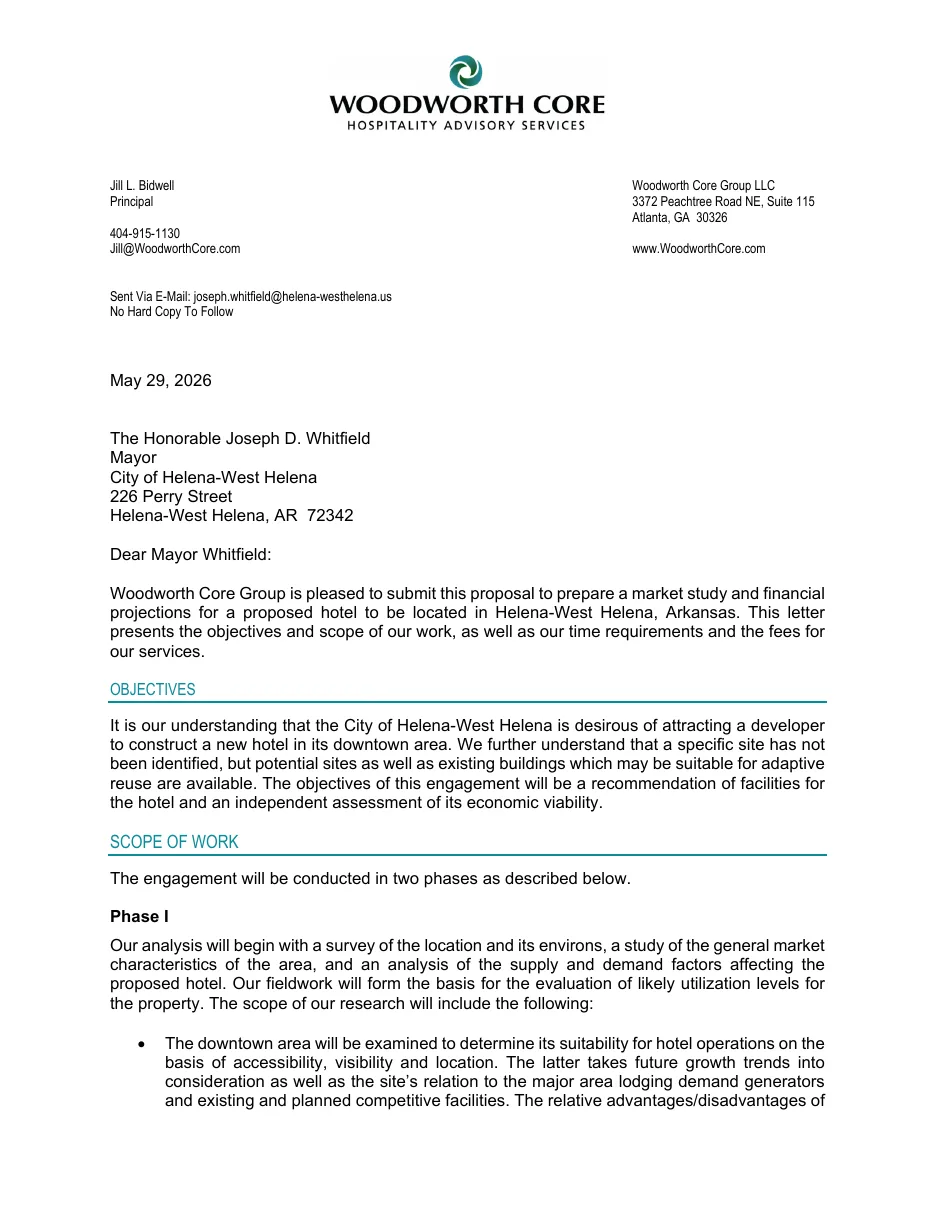
Tonight at 6 PM the council takes up a proposal to pay an Atlanta
consulting firm $9,500 to study whether downtown Helena can support a new hotel —
what the demand looks like, what rooms rent for, which segments fill them, and whether
the numbers support building. The proposal is item 4 on the agenda, and the full
document is scanned at the bottom of this page. proposal
I run the downtown Helena hotel those consultants would interview to get their data. If
the city is shopping for market research, I'm right here — and the answers are
below, published, at no charge.
First, the disclosure
I own and operate the Edwardian Inn. It is the only operating bed and breakfast in Helena. I pay the A&P hospitality tax on every room I rent, every month, and I serve on the A&P commission. The study on tonight's agenda says its consultants will interview the managers of comparable local properties for occupancy, rates, and demand data. In this market, that is largely me. So instead of waiting to be interviewed, here is the data, published where every resident and every council member can read it.
You should weigh what I say knowing I have a stake. You should also weigh that nobody else in this conversation has seventeen years of nightly hotel books for downtown Helena. I do, and they are below.
What the city would be buying
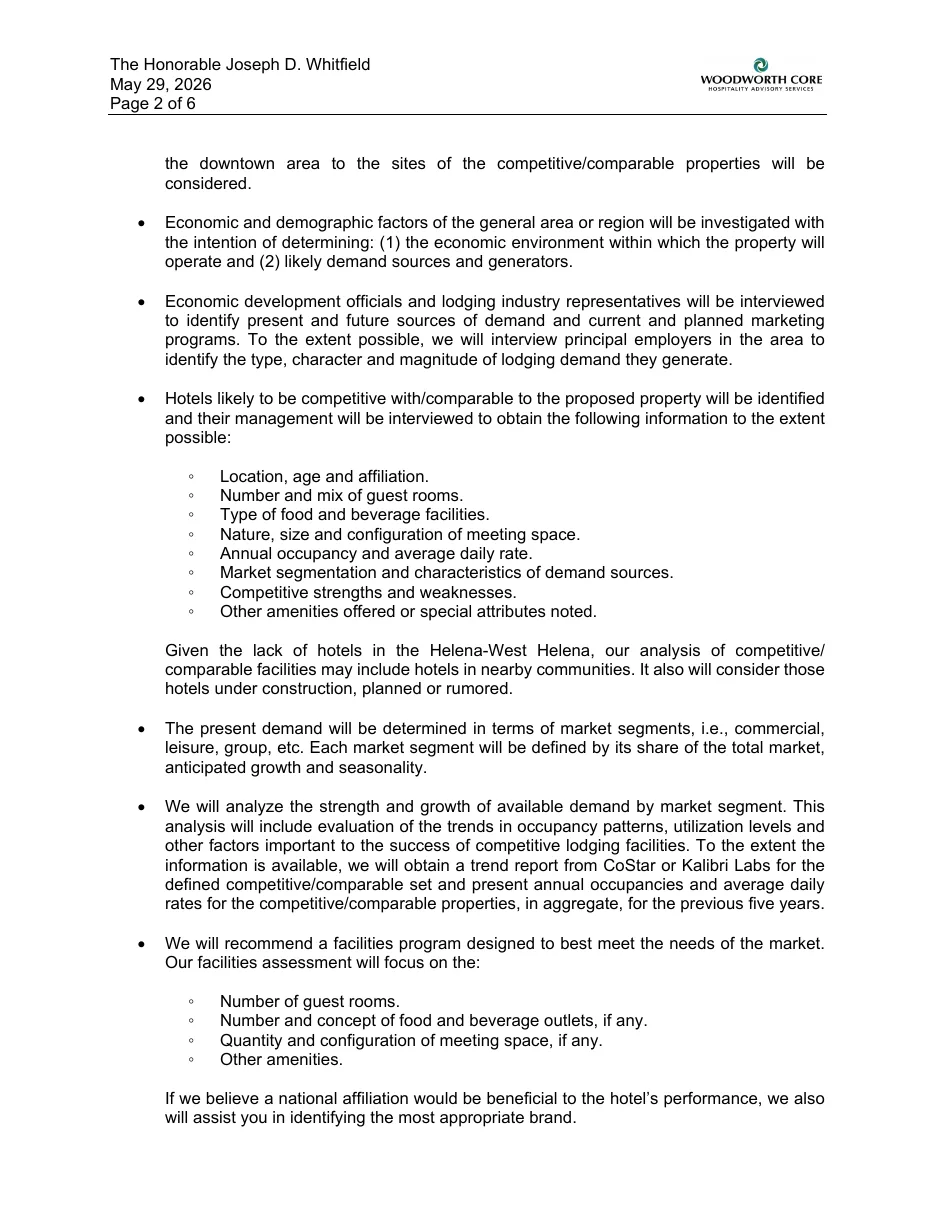
The proposal is from Woodworth Core Group of Atlanta, dated May 29, 2026, and addressed to the Mayor. Its stated objective is not neutral fact-finding. The first sentence of the objectives section says the city "is desirous of attracting a developer to construct a new hotel in its downtown area." The scope includes helping the city identify "the most appropriate brand" if a national chain affiliation looks beneficial. This is step one of a courtship strategy, in the document's own words.
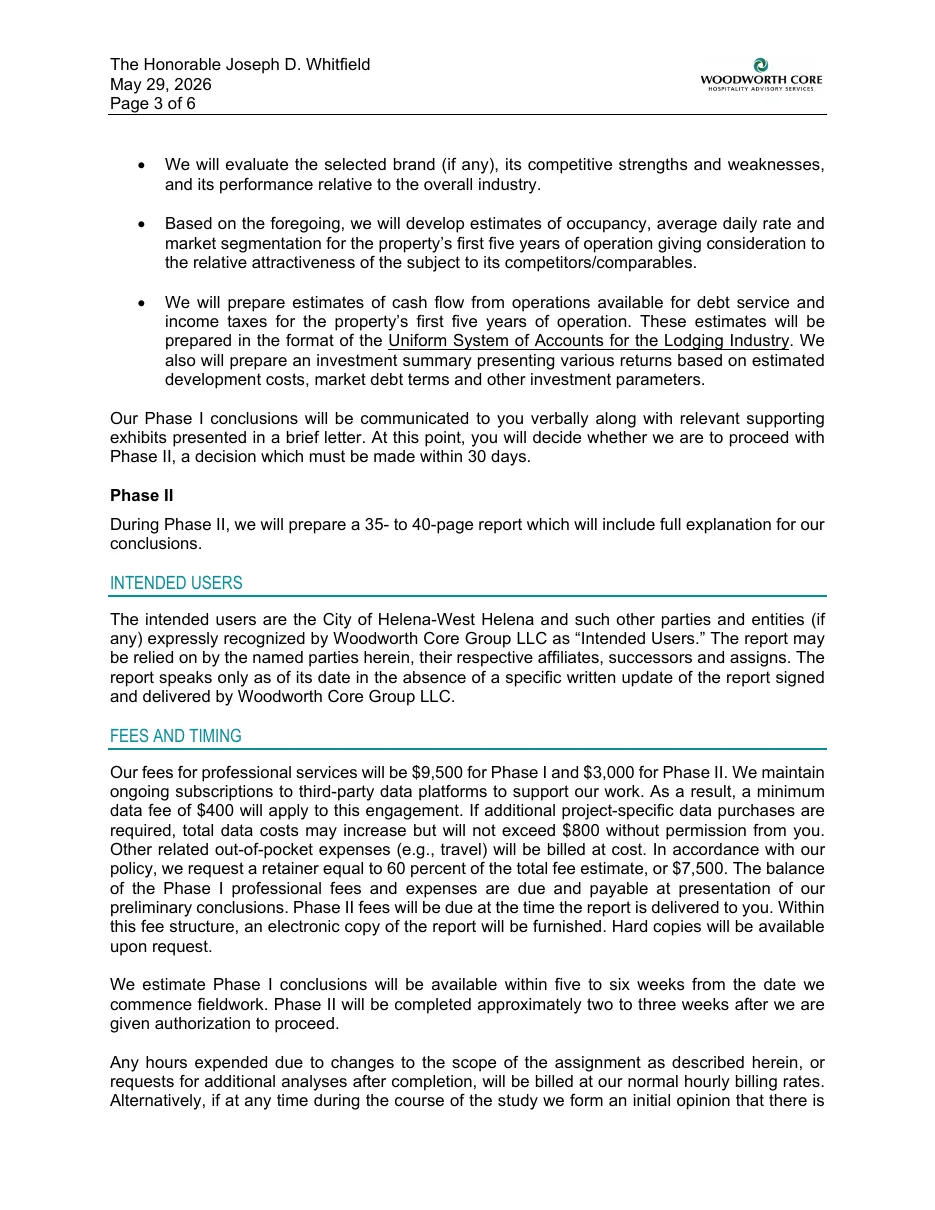
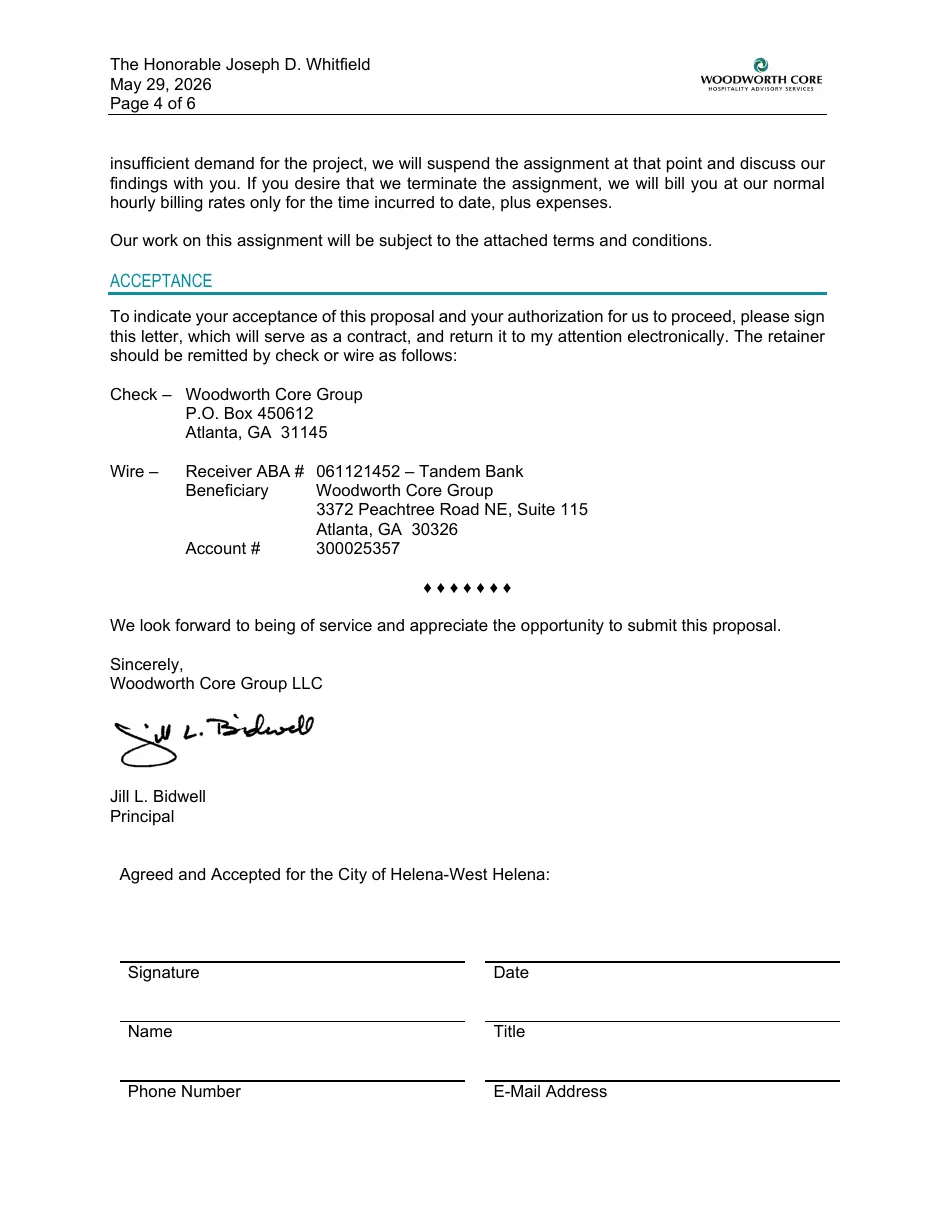
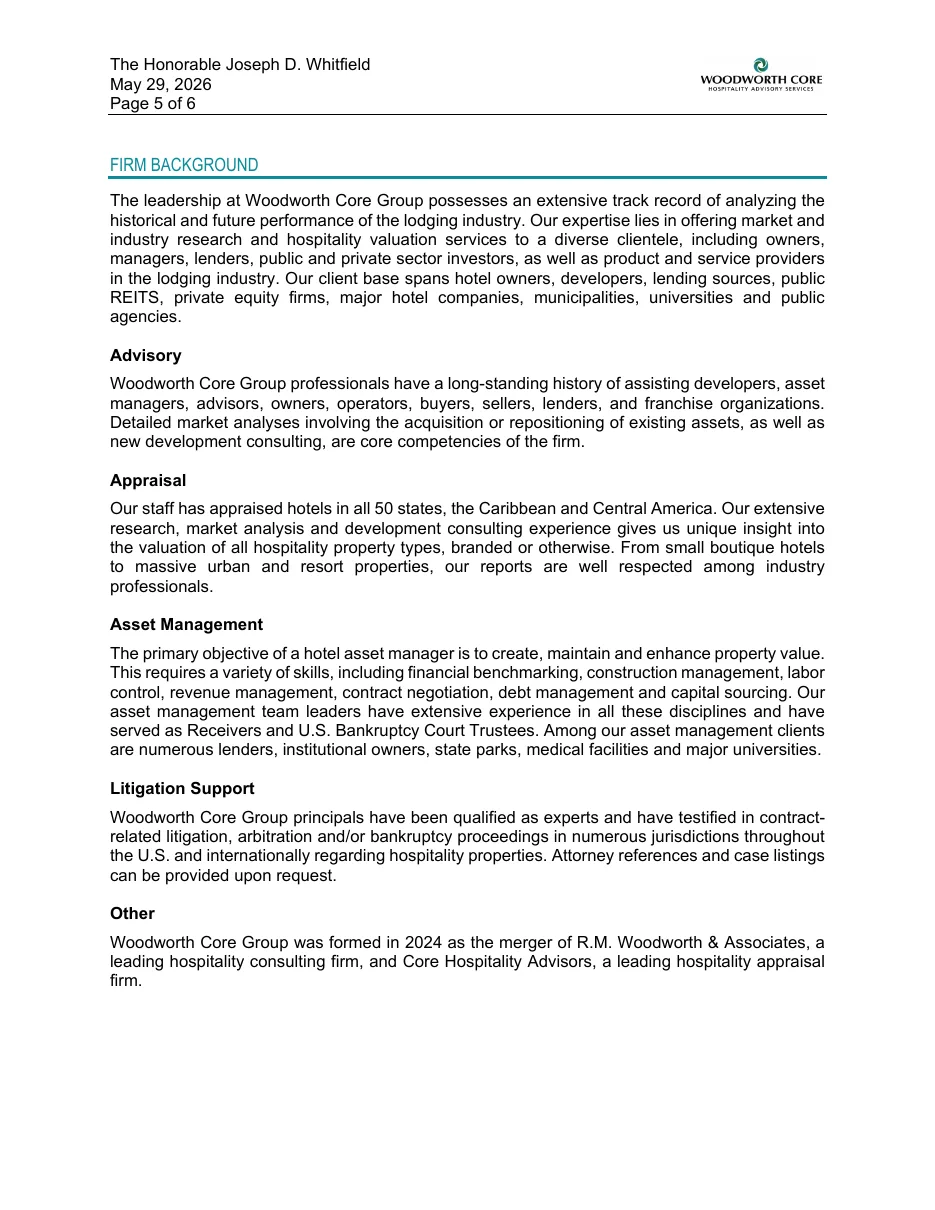
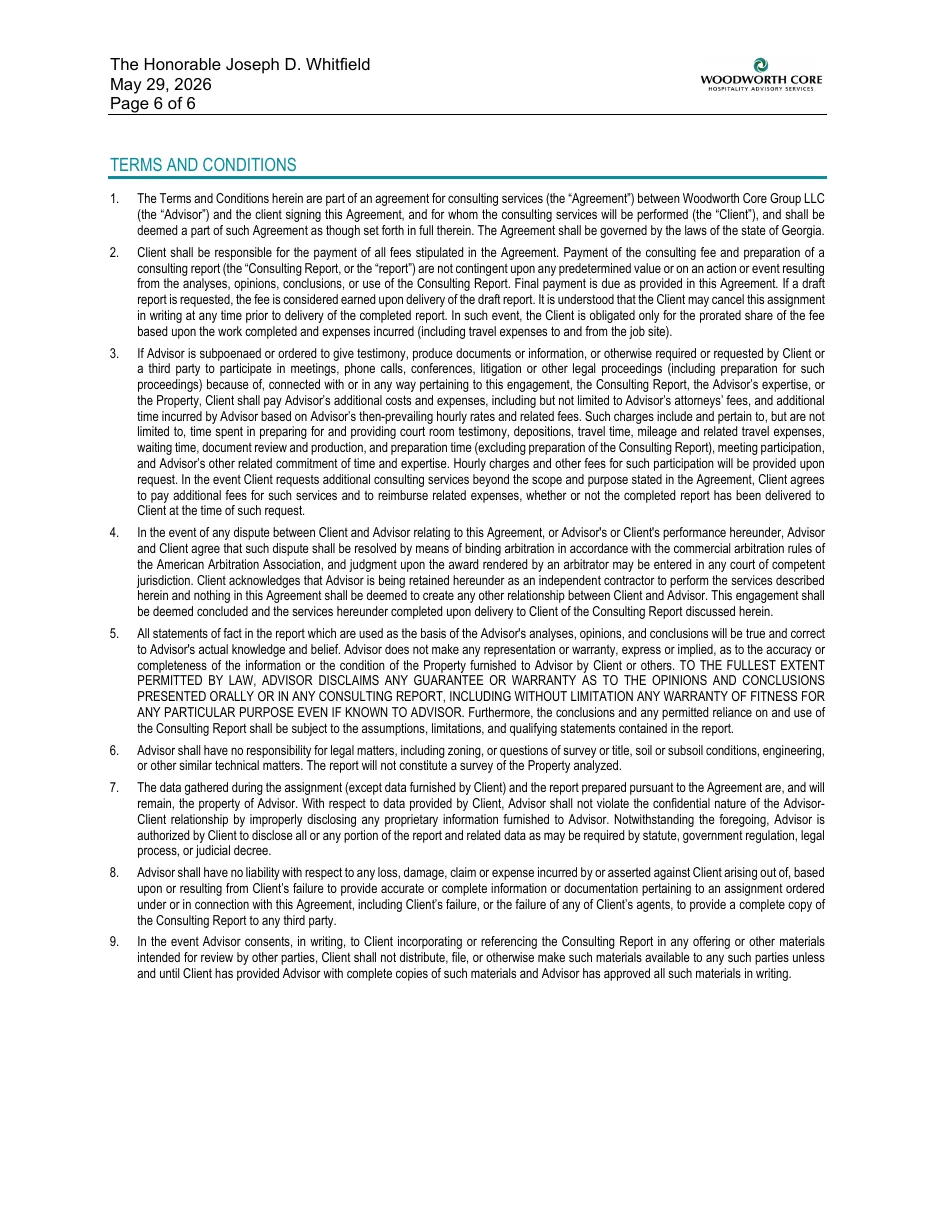
The price: $9,500 for Phase I, plus a $400 to $800 data fee, plus travel at cost, with a $7,500 retainer due at signing. Phase I ends with conclusions delivered verbally, with supporting exhibits in a brief letter. The written 35-to-40-page report is Phase II, another $3,000. Under the contract's terms, the data gathered stays the consultant's property. So the roughly $10,000 first phase buys the city a phone call and a letter.
To the firm's credit, the proposal contains an honest clause: if they conclude mid-study that demand is insufficient, they stop and bill only for time incurred. Keep that clause in mind while you read the next section.
Seventeen years of hotel demand, measured nightly
These numbers come from my property management system, which records every room, every night, since October 2009. Occupancy is computed against the rooms we actually operated (nine rooms through 2019, ten since 2020). Rates are what guests actually paid, not what we listed.
| Year | Occupancy | Avg. nightly rate | Nights the house was full |
|---|---|---|---|
| 2010 | 33.1% | $77 | 32 |
| 2011 | 37.6% | $81 | 32 |
| 2012 | 37.8% | $85 | 23 |
| 2013 | 38.5% | $85 | 37 |
| 2014 | 33.4% | $91 | 19 |
| 2015 | 33.1% | $91 | 20 |
| 2016 | 43.7% | $101 | 33 |
| 2017 | 45.9% | $117 | 22 |
| 2018 | 40.6% | $116 | 24 |
| 2019 | 33.6% | $113 | 3 |
| 2020 | 22.1% | $116 | 5 |
| 2021 | 33.8% | $126 | 23 |
| 2022 | 40.6% | $133 | 19 |
| 2023 | 41.4% | $137 | 25 |
| 2024 | 38.7% | $134 | 22 |
| 2025 | 37.0% | $133 | 23 |
| 2026 (Jan 1–Sept 14) | 34.8% | $136 | 16 |
What the table says, in plain sentences:
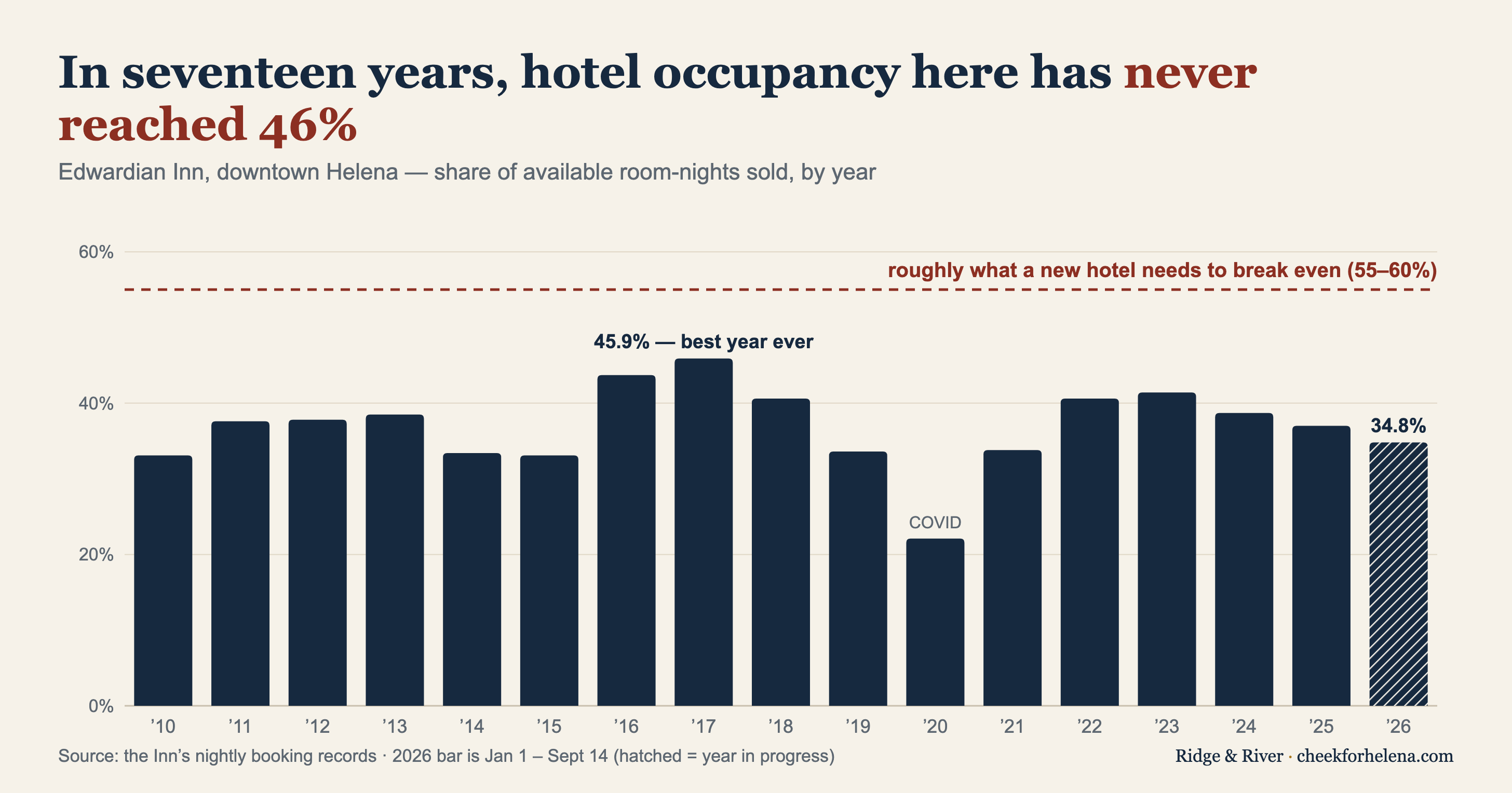
- In seventeen years, occupancy has never reached 46% in a calendar year. The best year on record is 45.9%, in 2017, when the house had nine rooms. With today’s ten rooms, the best year is 41.4%, in 2023, and it sold the same number of room-nights as 2017. A new hotel generally needs sustained occupancy around 55 to 60 percent to pay its debts.
- Rates have only kept pace with inflation. $77 in 2010, $138 in 2026. Sixteen years at the only boutique property in town, and no pricing power beyond inflation ever appeared.
- The house fills about 20 to 25 nights a year — King Biscuit weekend, a church mission week, an occasional full-house buyout. That is one night in fifteen. Those peak nights are real, and they are the strongest argument for more rooms. But a hotel financed on 25 strong nights and 340 weak ones is how buildings end up empty.
- Half the calendar is deep off-season. Averaged over sixteen full years, January runs 22%, December 30%, February 31%, August 32%. July, the best month, runs 49%.
- And the trend is going the wrong way. 2023 was my high-water mark. Comparing the same January-through-mid-September window across years, 2022 ran 41.8%, 2023 ran 40.5%, 2024 ran 39.1%, 2025 ran 41.2% — and 2026 is at 34.8%, on pace to be my slowest year since 2021. This is the market a new hotel would be built into.
My numbers are not an outlier. Industry data for Helena's thirteen active short-term rental listings shows the same picture: roughly 38% occupancy at an average rate around $154. Fourteen independent operators, one number. Nobody in this market is mispriced. There are simply not enough guests, and that is in a city that has lost roughly 43% of its population since 2000.
The buildings we already have
Helena has run this experiment before, at every scale. Magnolia Hill on Perry Street operated as a bed and breakfast and closed. Foxglove on Beech Street no longer operates. Of all the bed and breakfasts this town has had, the Edwardian is the one still taking guests. On the motel side, the Holiday Star sits vacant; at a council meeting in May 2025, a city official described it catching fire "for the fifth time," among the vacant structures being burned and scavenged for metal (the city's own video, at 1:05:21).
And then there is the Hotel Cleburne, the grand old hotel downtown, empty for many years. I want to say this carefully, because I understand the dream and I share it: nobody would love to see the Cleburne alive again more than I would. But wanting it is not the question. The question is whether hotel demand can pay for that renovation, and seventeen years of nightly data say it cannot. Historic renovation costs more per room than new construction, not less. Which means a study pointed at this market ends one of two ways: the consultants invoke their walk-away clause and tell us no — or they tell us yes, and the yes arrives with a public subsidy request attached, because at these occupancy numbers no private lender says yes alone.
My view: this is a bad idea, and here is why
I support the ambition behind this proposal. Downtown revival is the right goal, wanting to act on it is the right instinct, and I will work beside anyone reaching for it. I disagree with this particular step, for three reasons.
First, the research question is already answered, and the answer is above. The city is preparing to pay an outside firm roughly $13,300 all-in — $9,500 now, with a $7,500 retainer wired to Atlanta at signing — for research whose core inputs would come from interviewing me. A community member is handing the city that research today, at no charge, in more detail than a five-week fieldwork pass will produce. To be plain: the Edwardian has never taken a dime of city support, and I am not asking for one now. The numbers are free. I just hope tonight shows something I believe about this town — that the people already doing the work here carry more answers than any outside consultant, and it costs nothing to ask us first.
Second, developers do not need to be courted — they need a reason. If this market were ready for a hotel, developers would already be studying it at their own expense. Marriott, Hilton, and every franchise group employ full-time development teams whose whole job is finding viable markets. Nobody had to pay Walmart to find our town. When a location becomes attractive — when the calendar fills, when the occupancy numbers above start climbing past 50 — the developers show up with their own money and their own consultants, and our job is just to say yes carefully. We are not there yet. Paying to be studied does not move us one guest closer.
Third, every one of these dollars has a better local use. The way we become attractive is by building the demand side — the festivals, the trail, the river, the events that fill rooms at every price point when they run — and by backing the small operators already fighting for this downtown: the shops, the restaurants, the thirteen families running short-term rentals here. $13,300 is real money in that world. Spent on an Atlanta consultant's letter, it is gone. Spent here, it compounds.
Two more numbers belong in the record. First: a branded hotel here would almost certainly be a franchise, and franchise fees average about 11% of room revenue, paid out of the community to the brand company every month, forever (HVS U.S. Hotel Franchise Fee Guide). Second: when cities go further and put public money into hotels directly, a Cornell study of all 21 fully publicly developed hotels in the United States found strong evidence that the privately owned hotels nearby do worse afterward. That is the road this study is the first step down: public money spent to create a subsidized competitor to the businesses that built here without one — my inn, and the thirteen families running short-term rentals in this town.
So here is what I hope the council asks tonight, whatever it decides:
- Which budget line pays the $9,500, and what waits so this can go first?
- The proposal is dated May 29. Has the retainer been paid, and has any work begun?
- If the city proceeds, will it also buy Phase II so there is a written report, and will that report be public? Public money should not buy a phone call.
- Is a developer actually waiting on this study, or is it speculative?
- Was a second proposal solicited for comparison?
And my standing offer, to the council and to any developer: if someone arrives ready to invest their own money in lodging here, I will hand them seventeen years of nightly demand data and every lesson that came with it, free, starting with this page. Guests first. The hotels follow revenue; they always have.
opens the document right here on the page
The documents
The full proposal, readable right here — so you don't have to take my word for any of it.
Proposal Woodworth Core Group hotel market study proposal — May 29, 2026, 6 pages
The complete proposal from tonight's council packet: objectives, scope, fees ($9,500 Phase I, $3,000 Phase II, $7,500 retainer at signing), and terms.