Our Water Department Is Finally Making Money. Now It Should Act Like It.
The short version
- Water rates more than doubled in three steps — my own 89 bills prove it — and an annual inflation adjustment keeps them climbing automatically.
- The water department, which lost $1 million in 2023, now budgets a $1.4 million profit for 2026. The money problem is solved. The treatment problem is not.
- The giant "balloon bills" hitting residents are often the city's own doing: the department admits it estimates bills when meters go unread, then reconciles months of usage on a single bill — and answers with late fees and "you must have a leak."
- The fix is simple, legal, and already written down by other Arkansas cities: a written leak-adjustment policy, limits on estimated billing, a leak team that catches balloon bills before they go out, and sewer charges that match reality.
- No state approval is needed. Only the city council can write these rules — and the surplus means we can afford to.
Helena-West Helena is losing the one resource it cannot replace: people. Not water — we have plenty of water. People. Property owners, renters, bill-payers. Every family that leaves takes a house off the tax rolls, a customer off the water system, and a neighbor off the block. Some of the houses they leave behind go dark, then derelict, then burn.
I want to talk about one specific thing that pushes people to that edge: the water bill.
The rates more than doubled. I can prove it from my own mailbox.
I have kept every water bill for my downtown business since the end of 2019 — 89 of them. Here is what they show. In 2020, my blended cost of water service was $12.58 per thousand gallons. This year it is $28.69. More than double, in three steps.
The cleanest way to see it is to hold usage constant. Take 11,300 gallons — a typical month at my property. At the start of 2024, before the increase, that usage cost about $94 in water charges under the old schedule. In May 2025, after the first phase, the same 11,300 gallons cost $122.50. In July 2026, after the second phase, it cost $150.97. That is a 60 percent jump in about two years, and the per-thousand-gallon rate nearly tripled — from $2.82 to $7.58. Same property, same meter, same water. Only the rate changed. (That is a commercial account, and residential schedules differ — but the residential numbers below are the water department's own.)
The same 11,300 gallons, three different bills
data table
| Billing period | Usage | Water charges | Marginal rate |
|---|---|---|---|
| Early 2024 (pre-increase schedule) | 11,300 gal | $94.37 | $2.82/kgal |
| May 2025 (actual bill) | 11,300 gal | $122.50 | $5.07/kgal |
| July 2026 (actual bill) | 11,300 gal | $150.97 | $7.58/kgal |
And the increases are not finished. They are automatic. The rate ordinance the council passed in October 2024 built in a yearly increase indexed to the federal water-sewer-trash inflation measure, and its Article 4 says "the water rates may be adjusted without a public hearing" Ordinance 16-2024. In March 2026 the council rewrote that increase as Ordinance 6-2026. Starting January 1, 2027, and every January 1 after, the water rates "shall be adjusted" by that measure's change over the past year, capped at 6 percent, and the new rate schedule "shall not require the adoption of a separate ordinance." At last year's 4.1 percent, today's $7.58 per thousand gallons would become about $7.89 in 2027. That happens with no new vote and no hearing, unless the council acts. The ordinance lets it: the council "may also elect to implement an adjustment that is lower." Those increases are already law.
The water department's superintendent laid out the residential schedule at the June 22 public hearing: the minimum water charge is now $24.32 plus $7.58 per thousand gallons above the first thousand, with sewer at $18 plus $5 per thousand 0:07:09. He also confirmed the history — a rate study in 2019, another in 2023, an increase voted in 2024 so large it legally had to be phased in two parts 0:07:35.
How we got here — the whiplash
The story of how these rates arrived matters, because I lived it, and because it is why many people still don't trust a water bill when they open one.
In the summer of 2024, the city passed a large increase and put it on bills immediately. My August 2024 bill nearly doubled overnight for the same usage. The public reaction was immediate and loud. Within weeks the council met in special session to walk it back — attorney James Valley read out an ordinance "establishing a moratorium on the implementation of water and sewer rates," under which customers who had already paid the new rate would have their accounts credited 0:05:02. At that same meeting, one resident said her bill was "800 percent higher — went from 100 to 800" with sanitation included 0:52:12, and Mayor Franklin walked through his own household's usage 0:14:10.
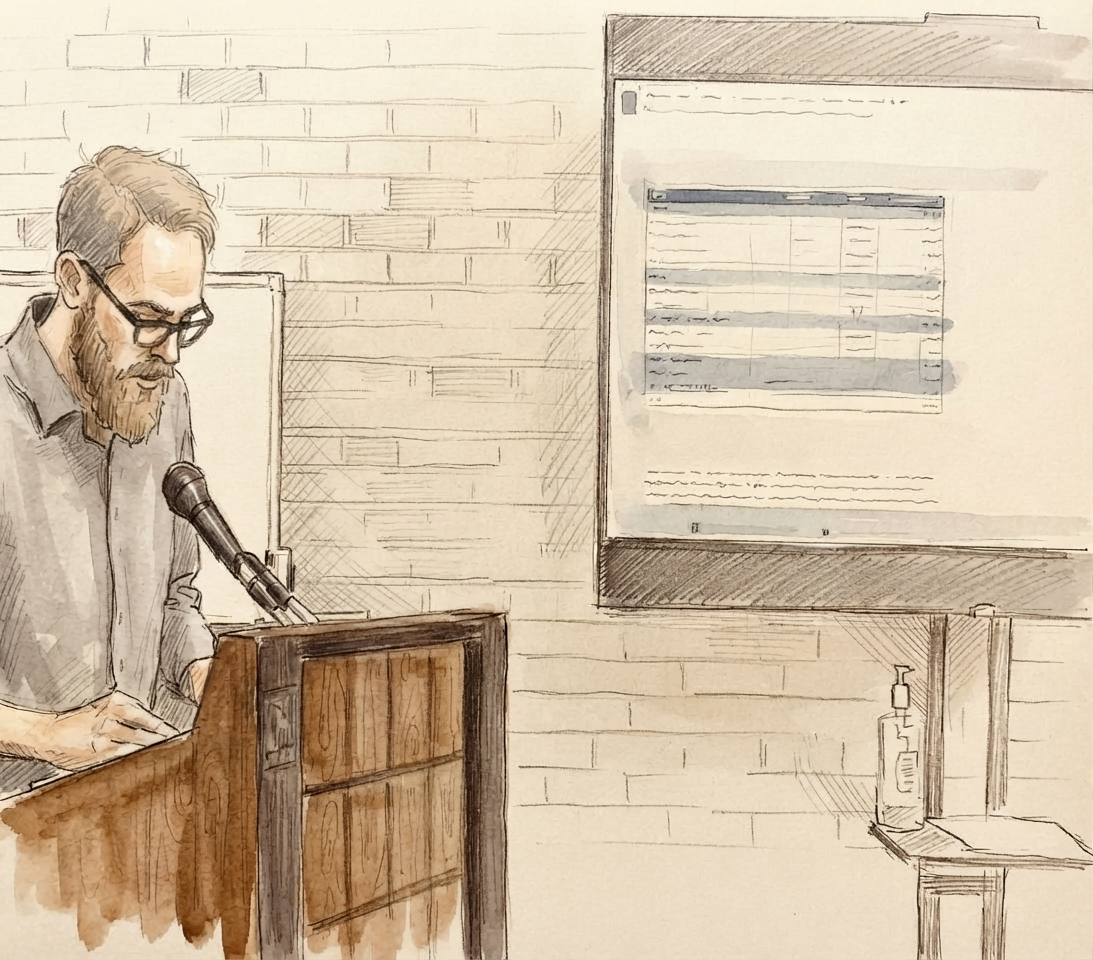
I was in those rooms. At the September 24, 2024 meeting I stood up and asked the council to publish the full text of the proposed rate ordinance in public forums before voting — because the details are where bills come from, and residents deserved to read them 0:09:06. That episode — watching a rate nearly double, get walked back, and come back again — is what got me reading ordinances, budgets, and audit reports in the first place. I have not stopped since.
The increase eventually passed as Ordinance 16-2024 on October 29, 2024 — on a 4–2 vote, with Joe St. Columbia and Kyle Miller voting no, and resident Richard Wyant on the record against building "automatic" increases into the ordinance Ordinance 16-2024. It was structured — as the superintendent explained at this June's hearing — in two phases, because it was too large to take legally in one step: the first phase landed on bills at the end of 2024, and the second phase, scheduled for January 1, 2026, was pushed to April 1, 2026 by a later amendment 1:06:31. My own bills show both steps arriving, to the month.
And here is a detail from my own mailbox that deserves scrutiny. As amended on passage, the ordinance's charges were to apply "on the bill dated on or after January 1, 2025" — and its own Article 4 says the bill date, not the billing period, is what controls Ordinance 16-2024. My first bill at the new rates is dated December 30, 2024. Two days before the ordinance's own start date, by the ordinance's own definition. I raised this at the time; the answer I got was a lawyerly distinction between billing dates and effective dates — a distinction the ordinance itself does not make. Nobody ever corrected it.
One thing from that 2024 fight has stuck with me. A sitting council member, Don Etherly, told the room the city had switched everyone to digital meters years earlier and, in his words, the water superintendent "does not remember those meters ever being tested and calibrated since he's been here — that could explain why people have 30,000 gallon usage" 0:22:02. In other words: the possibility that the meters themselves were wrong was raised, out loud, by the council, two years ago. It was never resolved. It is the same question residents are still asking today.
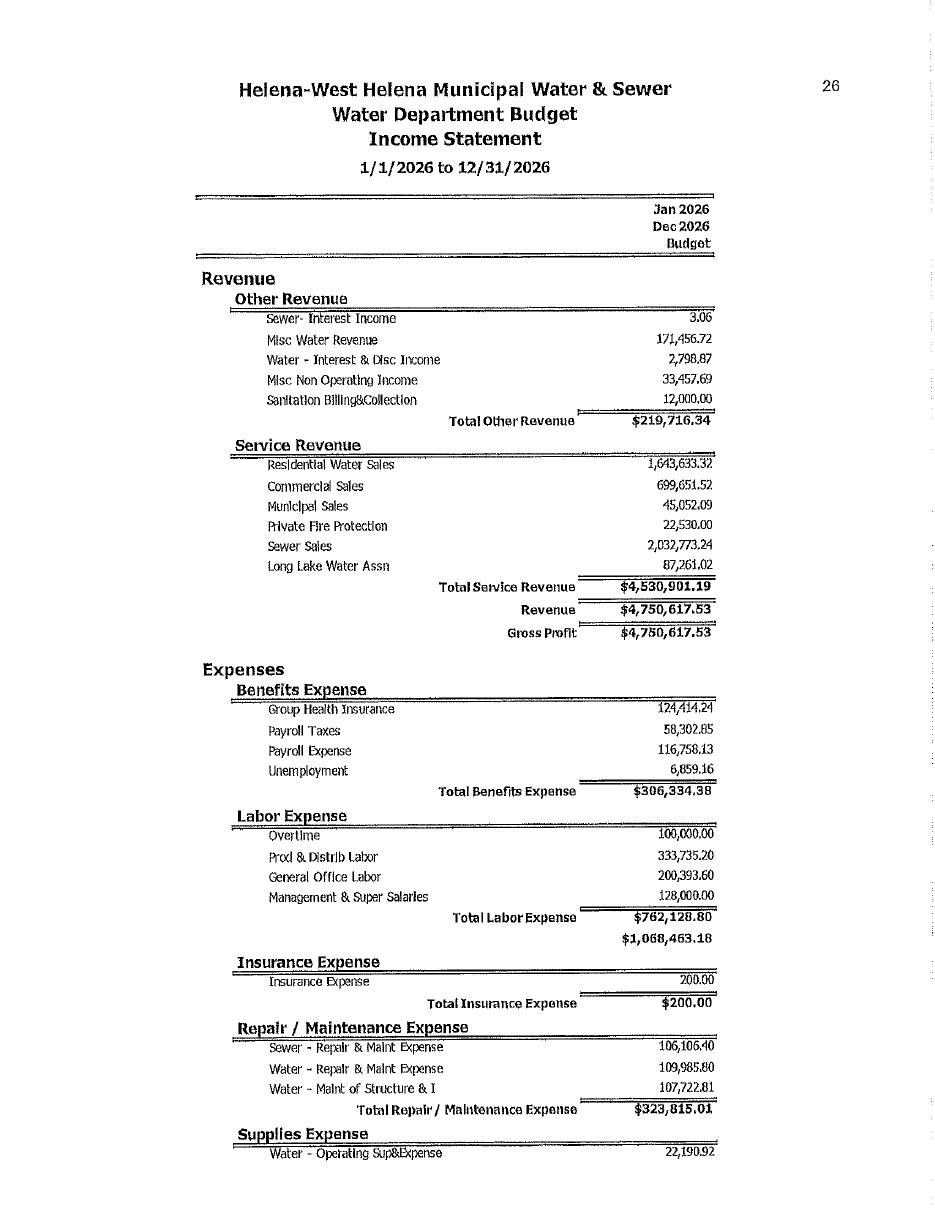
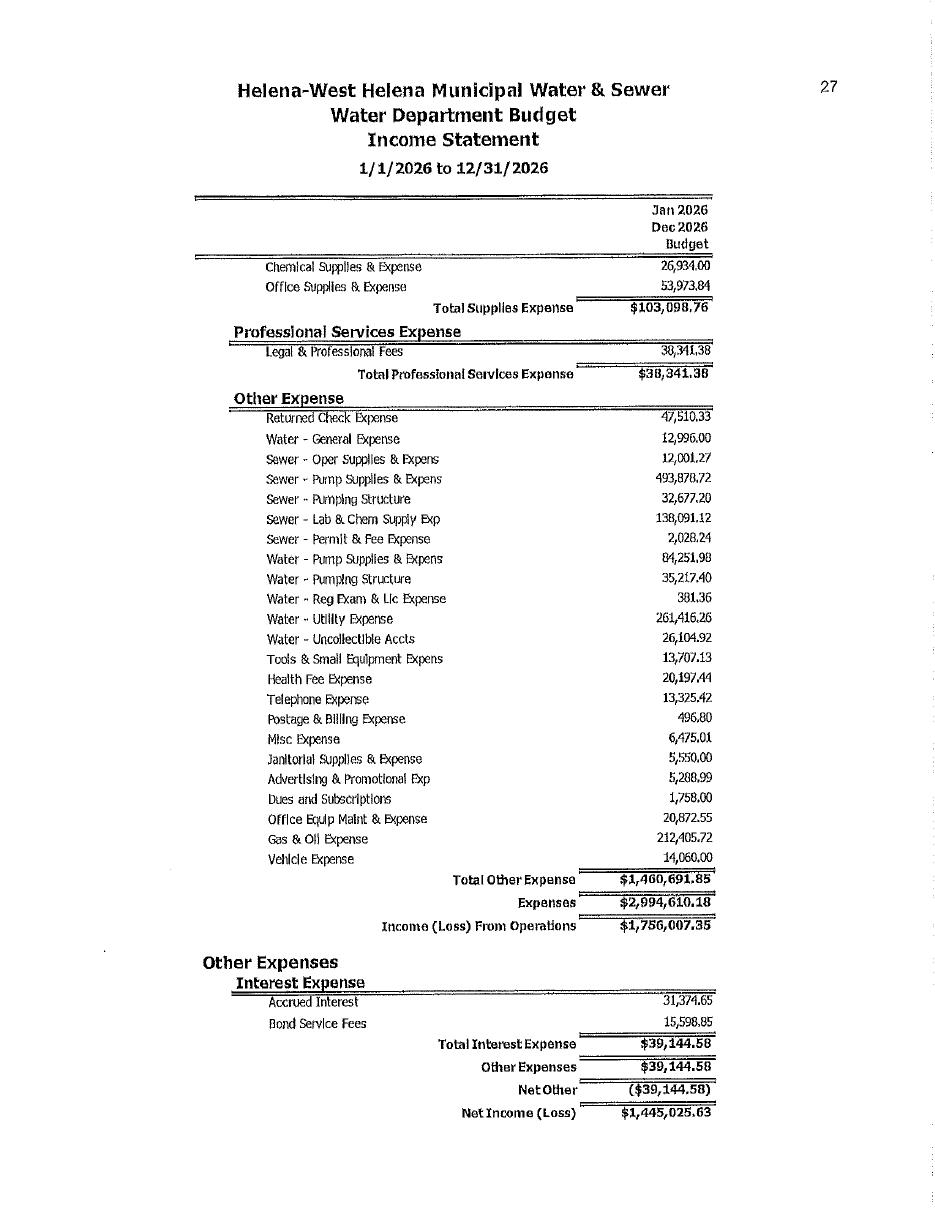
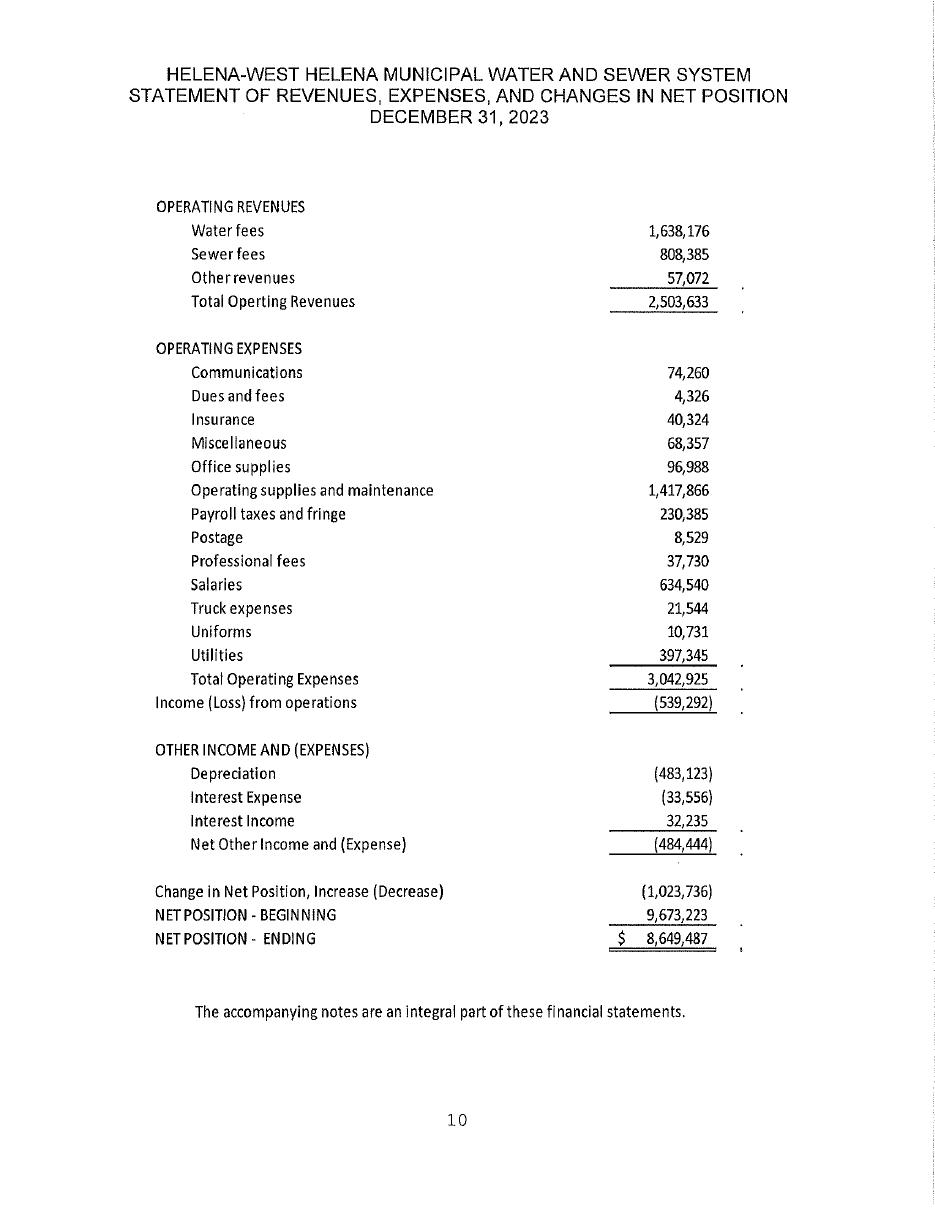
I am not going to argue in this piece about whether the rates themselves are right. The system was starved for years and the pipes are old; real money has to come from somewhere. Here is the number that matters instead: the city's own 2026 amended budget plans for the water department to make $1,445,025 in net income this year budget, p. 26–27. That is a swing of nearly two and a half million dollars from 2023, when the audited books showed the department losing $1,023,736 FY2023 audit, p. 10. The rate increases worked. The department that was broke is now, by the city's own plan, strongly in the black.
The water department: broke, then flush
data table
| Year | Net income | Basis |
|---|---|---|
| 2017 | −$430,582 | audited |
| 2018 | −$934,665 | audited |
| 2019 | −$116,770 | audited |
| 2020 | +$280,377 | audited |
| 2021 | −$718,165 | audited |
| 2022 | +$59,467 | audited |
| 2023 | −$1,023,736 | audited |
| 2024–25 | — | audits not yet published |
| 2026 | +$1,445,026 | city budget |
So the question is no longer "does the water department have money?" It is: what kind of water department do we want to be, now that it does?
What a $1,400 water bill actually is
Everyone in this town knows somebody with a water bill story. At the June 22 hearing the stories came one after another, on the record.
A woman whose normal bill runs $80 to $90 opened a bill for $1,496.33. The leak turned out to be on the city's side of the line — workers had disconnected the wrong house. Her bill was eventually adjusted down to $168.11, but only after she fought for it 1:02:48.
A landlord watched a vacant house run up roughly $1,400 across three months with no shutoff — while her own occupied home was cut off after dark over a bill she says she had already paid, plus a $50 delinquent fee and a $15 late charge 0:38:38.
A retired man on disability was told his jump was a leak. He had his lines tested: no leak. His $77 bill became $177, then $285 arrived right behind it. His question to the council: "Why are we paying $100 late fee on a water bill that is less than $100?" 1:46:54
At a March meeting, a resident reported an $85 late fee on a $149 bill, applied the day after the due date. Officials on the dais admitted that was "awful high" — the normal late charge is supposed to run about ten percent 1:01:00.
A bill like that is not an annoyance. On a fixed income, a $1,400 bill is a catastrophe — the kind of event that decides whether a family stays in Helena-West Helena or gives up on it. And when they give up, we all inherit the empty house.
The machine behind the balloon bill
Here is the part most people do not know, and it is not a rumor — it is the water department's own explanation, given publicly at least four times in the past year.
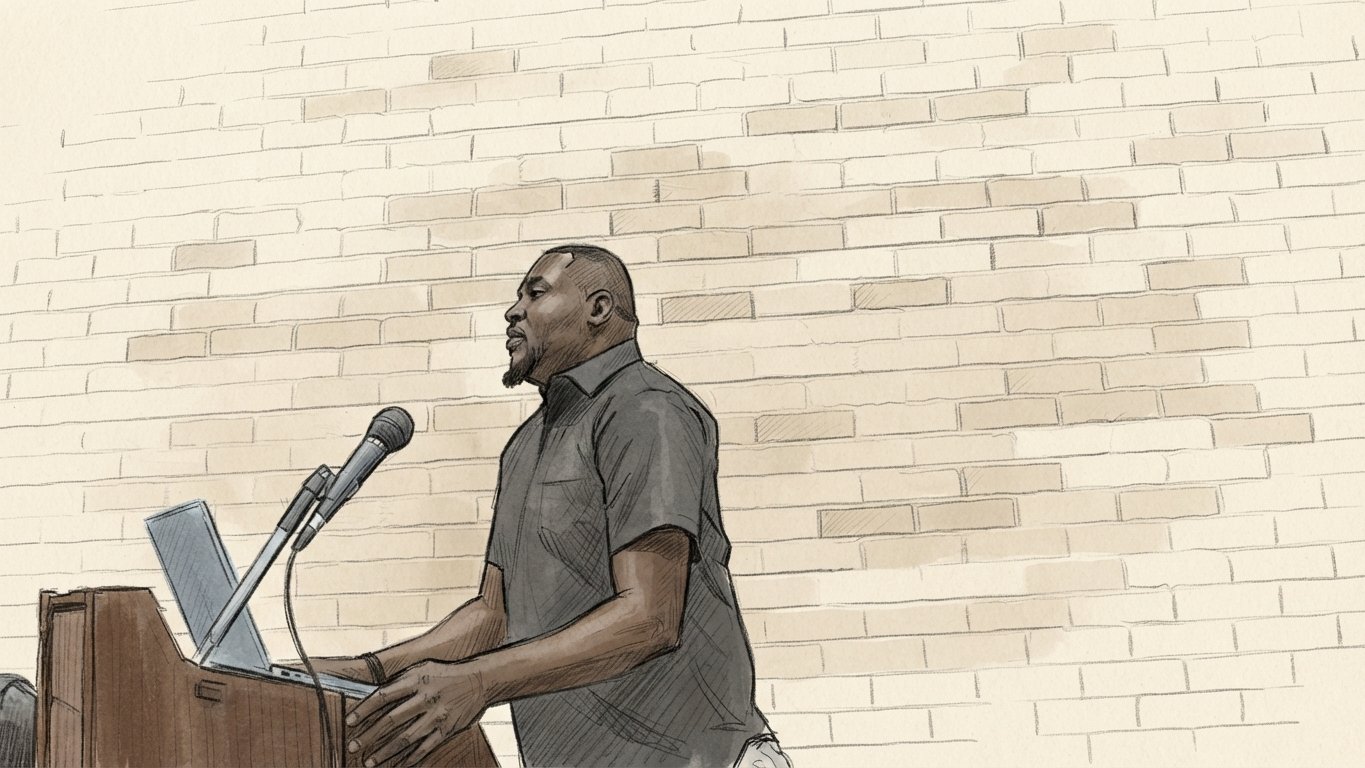
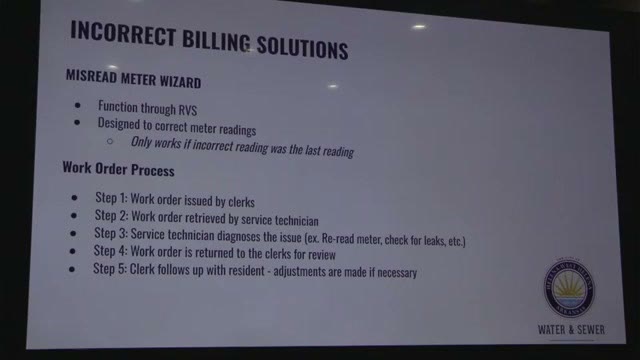
When the department cannot complete meter reads — winter weather, broken handheld tablets, not enough service techs — it estimates bills. The estimate is set low: "the lowest average of your bills," as the superintendent put it in December 1:46:02. Then, when a real read finally happens, the system "does catch-up": every gallon that went unbilled during the estimated months lands on one bill. In the superintendent's own words at the June hearing: "that explains a lot of the higher bills, like 'I got a double bill.' It's actually just back billing from the month before when it was estimated." 0:11:44
In January, the city described the new meters being read by driving past "without ever having to step out of the car — and they're taking an average of water used instead of actually reading the meter." The remedy offered: call the office and request "an adjustment for an actual read." Those calls, the city acknowledged, come in "at high volume." 0:45:35
Put the two mechanisms together and you get the balloon bill machine:
A former professional meter reader — a Helena resident who read meters for the Augusta, Georgia water system — stood up at the June hearing and said he had never heard of an "estimated water bill" until he moved here. His point was simple: if the reader actually visits the meter, estimates shouldn't exist 0:59:06.
I want to be fair about two things. First, leaks are real — I have had them at my own property, twice, both in hard winters, and they were my responsibility to fix. Second, the department has said it bought new tablets and hired service techs to fix the read problem, and the superintendent has warned honestly that accurate meters may make some bills go up 1:35:00. Fixing the reads is necessary. But it is not sufficient, because the problem is not just mechanical. It is posture.
The posture problem
Today, when a resident gets a catastrophic bill, the city's default answer is: it's your leak, your problem, pay it — with late fees. In September 2024, from the dais, Mayor Franklin put it plainly to residents packing the room: "if you a single person living in your house and your water bill is $500, it's just you there, you got a leak" 0:15:58. Sometimes it is a leak. But "you got a leak" is not a billing policy, and it is not true often enough to be the city's reflex.
When a bill is city-caused — a wrong-house disconnection, months of estimates reconciled at once — the burden of proof still falls on the customer, who has to fight through the billing office for an adjustment that is entirely discretionary. There is no written policy a resident can point to. Whether you get relief depends on who you reach and how hard you push. The adjustments I described above prove the city can adjust bills. It just has no rules for when it must.
A department that is losing money can plead poverty. A department budgeting a $1.4 million surplus cannot budget, p. 26–27. We are charging some of the highest effective rates in this region's history, to some of the poorest customers in Arkansas, under a billing system the department itself admits produces artificial balloon bills — and then we punish the customer for the balloon. That is exactly backwards.
What I would do instead
Before the list, one thing worth saying plainly: nobody in Little Rock has to approve any of this. The state Public Service Commission does not regulate municipal water utilities APSC — there is no state rule on estimated bills, back-billing, or late fees for a city-owned system. The only body that can write these rules for Helena-West Helena's water department is the Helena-West Helena city council. This is entirely, completely, a local decision.
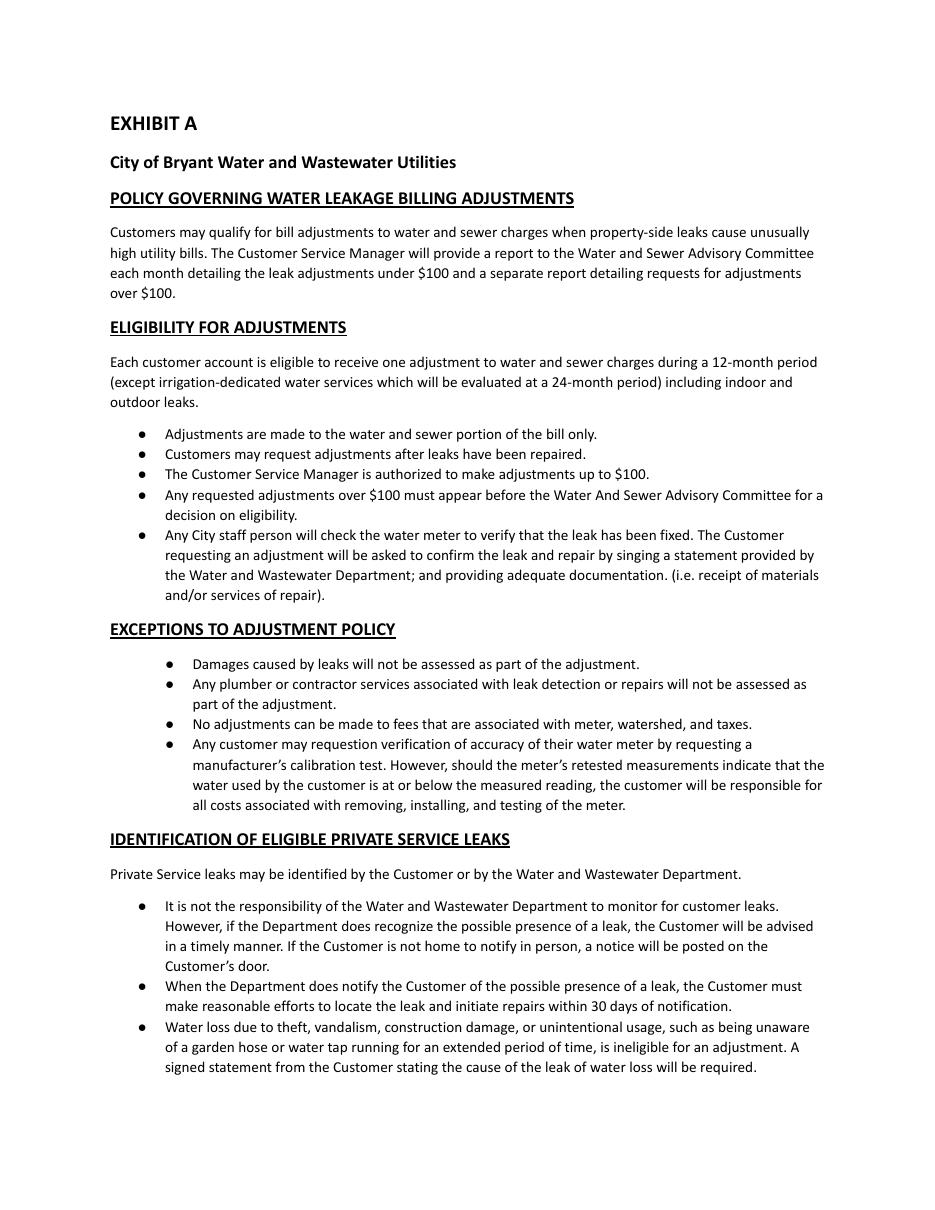
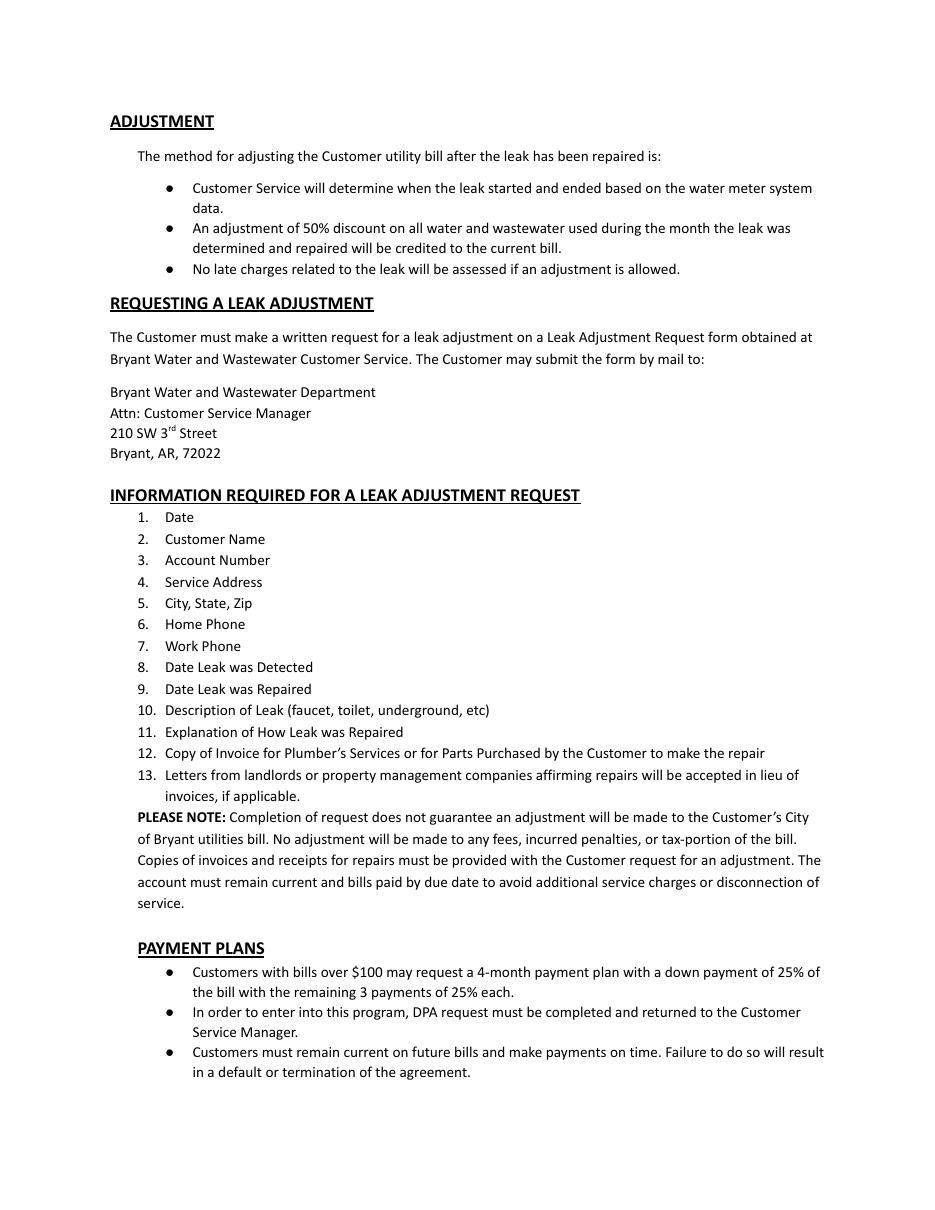
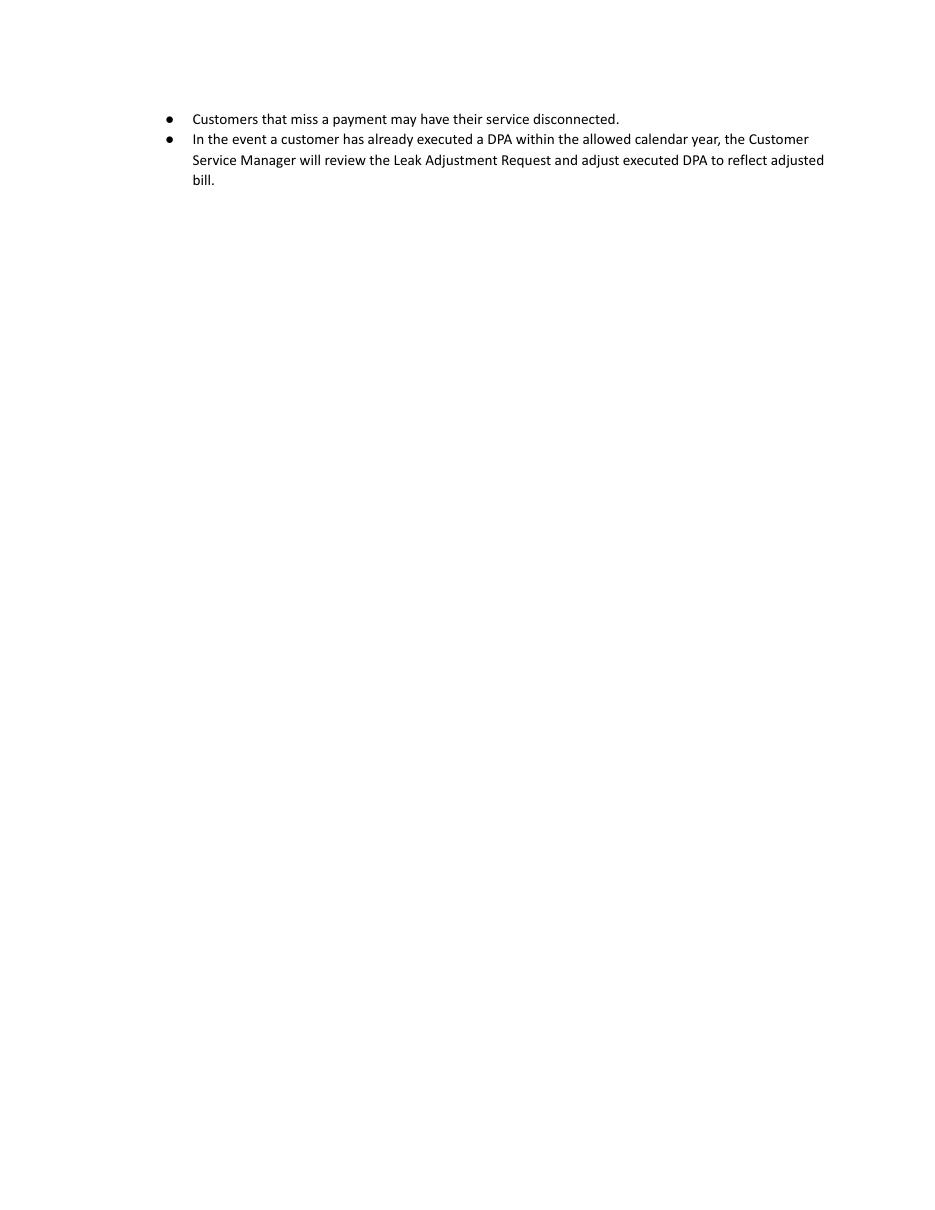
1. A written leak-and-adjustment policy — rules, not favors. Codify what is now discretionary: a customer with a documented leak gets a one-time adjustment (excess billed at the utility's wholesale cost, or averaged from their normal usage), with proof of repair. Sewer charges are credited for leaked water that never entered the sewer. City-caused errors — wrong-house work, back-billing after the city's own missed reads — are adjusted as of right, not as a favor, with no late fees. We would not be inventing anything. Bryant, Arkansas adopted exactly this policy in 2022: one adjustment per year, proof of repair, a 50% credit on the leak month's water and sewer charges, no late fees on any adjusted bill, and a monthly report of all adjustments to a public committee Bryant policy. Central Arkansas Water — the state's largest utility — runs a standing leak-adjustment program as a matter of routine. If Bryant and Little Rock can write it down, so can we.
2. An estimated-billing rule with teeth. No more than two consecutive estimated bills without an actual read — that is Texas's statewide rule for small utilities Texas rule. Every estimated bill must say ESTIMATED on its face, plainly. When estimates reconcile, the catch-up is capped and spread over the same number of months the estimates covered — automatically, with no late fees on the catch-up amounts. Texas and Florida both cap utility-caused back-billing at 12 months and require repayment plans as long as the underbilling ran Florida rule. Pennsylvania goes further: when estimated bills and an undetectable leak combine, the customer owes at most 150% of the same period last year Pennsylvania rule — the rule punishes the utility's failure to read, not the customer. The city does not charge you a penalty for its own unread meter.
3. A leak team — catch the balloon before it goes out. The billing system already knows when usage explodes. Before that bill ever prints, send someone. A small crew — even one dedicated tech — that visits high-usage flags, audits the line, tells the resident what is wrong, and offers to fix simple customer-side problems at a subsidized rate or free for those who cannot pay. Philadelphia's water department does this with its own contractors and lets the homeowner repay over five years, interest-free, on the water bill — a revolving fund that pays for itself. Atlanta funds a nonprofit that does free repairs for income-qualified homeowners out of utility revenue. Keep the account on estimated billing until the repair is done. Every gallon a leak crew saves is water the city no longer treats and pumps for free — this pays for itself twice: once in retained residents, once in unbilled water it stops wasting. And with federal water-bill assistance gone — the LIHWAP program expired in 2024 and Congress never replaced it — a local program is the only help that will ever exist here.
4. Sewer charges that match reality. Sewer is billed on metered water even when that water never reaches a sewer. Two fixes, both proven in Arkansas: bill residential sewer on winter-average usage (January through March), the way Russellville already does — so summer gardens and outdoor leaks structurally cannot inflate a sewer bill — or offer deduct meters for irrigation. I learned this one personally: the summer I ran soaker hoses to save two storm-shocked magnolia trees, I paid sewer charges on eighty thousand gallons that went into the ground and never touched a sewer pipe.
Fund all four out of the surplus. This is what I mean when I say the surplus should build a more efficient water system on both sides of the meter — the city's side and the customer's side. Pipes and pumps in front of the meter; leak response, honest reads, and written rules behind it.
Answering the hard questions before they are asked
I have sat in enough of these meetings to know the objections, because they have already been raised. I want to answer them head-on, because a good idea should be able to survive its own hard questions.
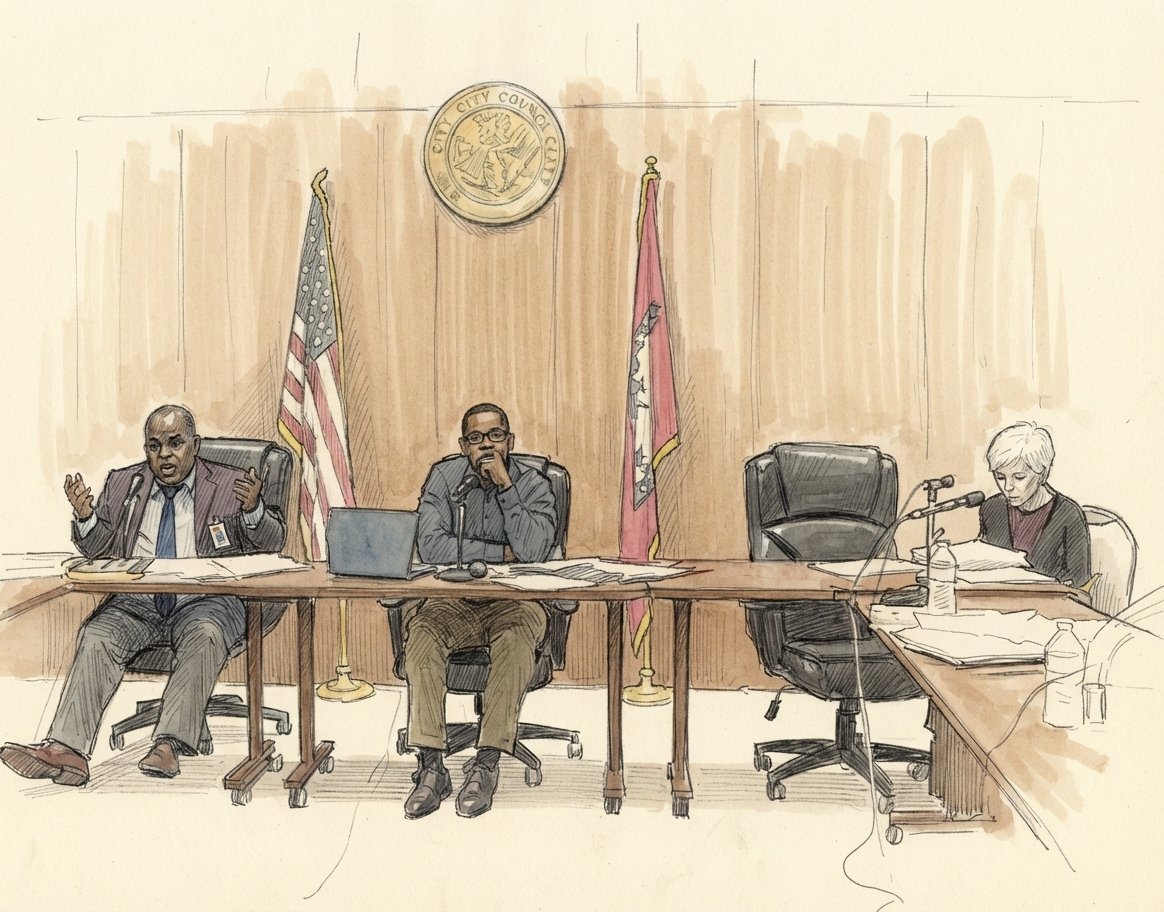
"The city can only work in the right-of-way. From the meter to the street the city fixes it; from the meter to the house, the homeowner does. That's the law." The city attorney is right about that 1:34:23, and nothing I am proposing changes it. A written leak-adjustment policy adjusts the bill, not the pipe — and the bill is entirely the city's own to set. The estimated-billing and back-billing rules govern how the city bills — its own house, start to finish. And the repair-help programs are built to respect the property line, not cross it: Philadelphia's is a loan the homeowner chooses to take and repays in full; Atlanta's routes the work through a nonprofit. Neither has the city doing unauthorized work on private property. The right-of-way rule tells us how to structure the help. It is not a reason to offer none.
"We cannot give away water. State law forbids it, and officials can be removed from office for handing out free water." Also true — and also not what this is 1:38:27. A leak adjustment is not a gift of free water. It is the correction of a bill for water that leaked into the ground and was never used — which is why Bryant, Arkansas has a written leak-adjustment policy on its books Bryant policy, and why Central Arkansas Water, the largest utility in the state, runs one as routine. If it were illegal to give away water, those cities could not do it. They can, because a fair, written, evenhanded billing rule is the opposite of a giveaway. A giveaway is discretionary — a favor for whoever asks the right person. A rule that applies to everyone equally is exactly what the law wants.
And here is the part worth sitting with. The statute behind the no-free-water rule — the one that can remove an official from office — does not only say the city can't give service away. Read the whole thing: it makes it unlawful to furnish utility service to anyone "unless payment is made … at the usual and regular rates, and in the usual manner" Ark. Code § 14-42-108. Usual and regular rates, usual manner — for everyone, the same. City officials cited that very statute at the July meeting while acknowledging cutoffs have not been applied consistently 1:44:00. The law is not a wall that only ever says no to residents. Read all the way through, it is a framework for treating people fairly and the same — which is all I am asking us to write down. Other Arkansas cities have already used that same framework to protect their customers. We can read the law the way they did.
The bottom line
The water department spent years broke, and this town paid to fix that — we are all still paying, every month. Fine. But the deal has to run both ways. A utility that charges modern rates owes its customers modern treatment: read the meter, tell the truth on the bill, write the rules down, and when something goes wrong, act like a partner instead of a collection agency.
We do not have a single resident to spare. The water department, of all places, should know what happens when there's a leak and nobody fixes it.
The documents
Every source referenced above, readable right here — the pages with the language cited, so you don't have to take my word for any of it. Full links at the bottom.
City budget Water Department Income Statement — 2026 Amended Budget, pp. 26–27
The city's own budget document (Mayor's Amended Budget, adopted January 28, 2026). Bottom line of page 27: "Net Income (Loss): $1,445,025.63."
State audit FY2023 audit — the department was losing money — p. 10
Arkansas Legislative Audit, Helena-West Helena Municipal Water and Sewer System, year ended December 31, 2023. Statement of Revenues, Expenses, and Changes in Net Position: "Change in Net Position, Increase (Decrease): (1,023,736)."
Arkansas law Ark. Code § 14-42-108 — the "no free water" statute, in full
The statute cited when utility relief comes up. Subsection (a) bars officials from taking service without paying like everyone else. Subsection (b) — the part less often quoted — bars furnishing service to anyone except at uniform rates:
A written adjustment rule applied evenly to every customer IS "the usual and regular rates, in the usual manner." Discretionary, case-by-case favors are what this statute forbids.
City ordinance Ordinance 16-2024 — the water-rate ordinance, with its automatic escalator
Passed October 29, 2024 (4–2). The operative language, from the final draft as amended on passage:
Article 3 was rewritten in March 2026 by Ordinance 6-2026: from January 1, 2027, the water rates adjust each January 1 by the past year's CPI-WST change, up to 6 percent, with no separate ordinance; the council "may also elect to implement an adjustment that is lower."
The passage minutes — including the amendments, the 4–2 votes, and a resident's objection to the automatic increases:
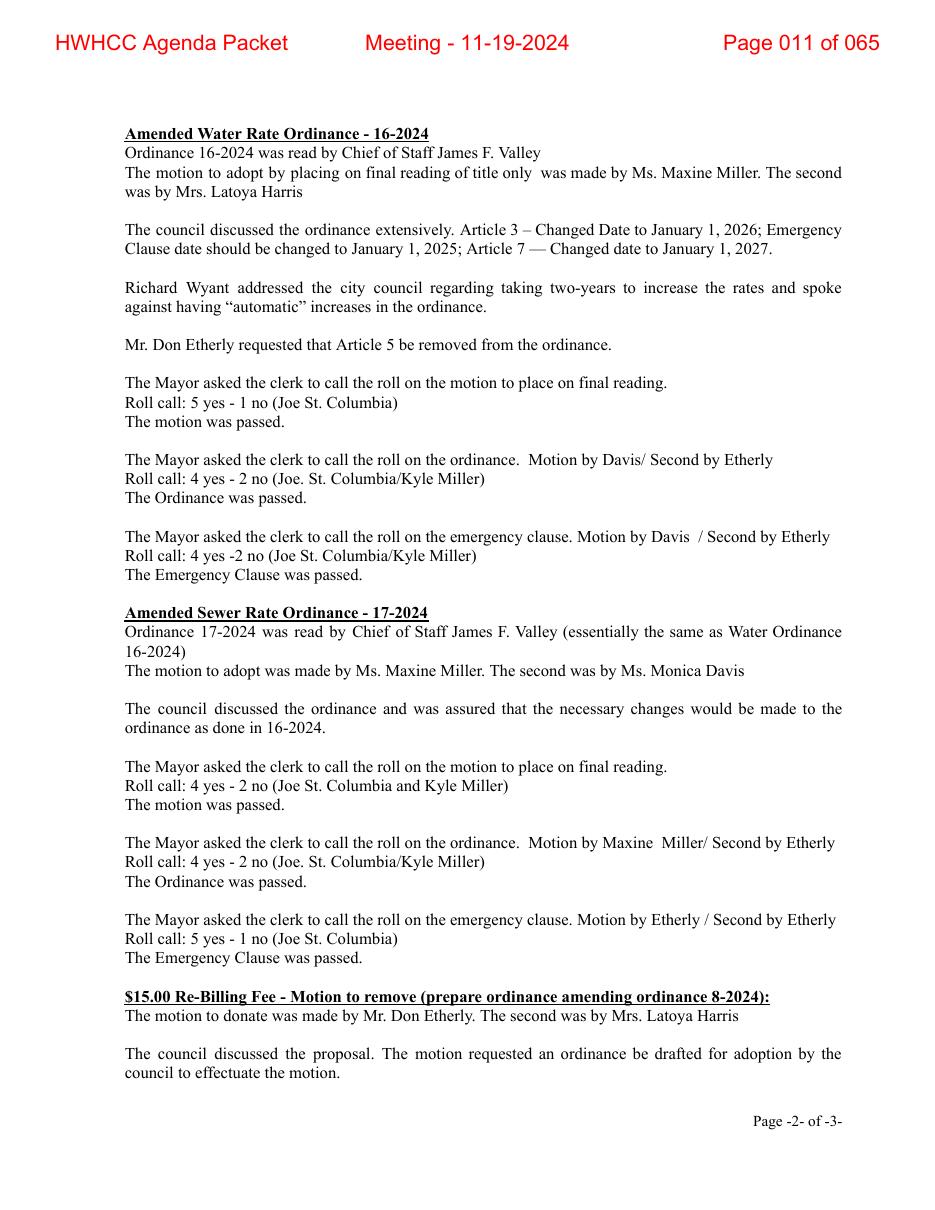
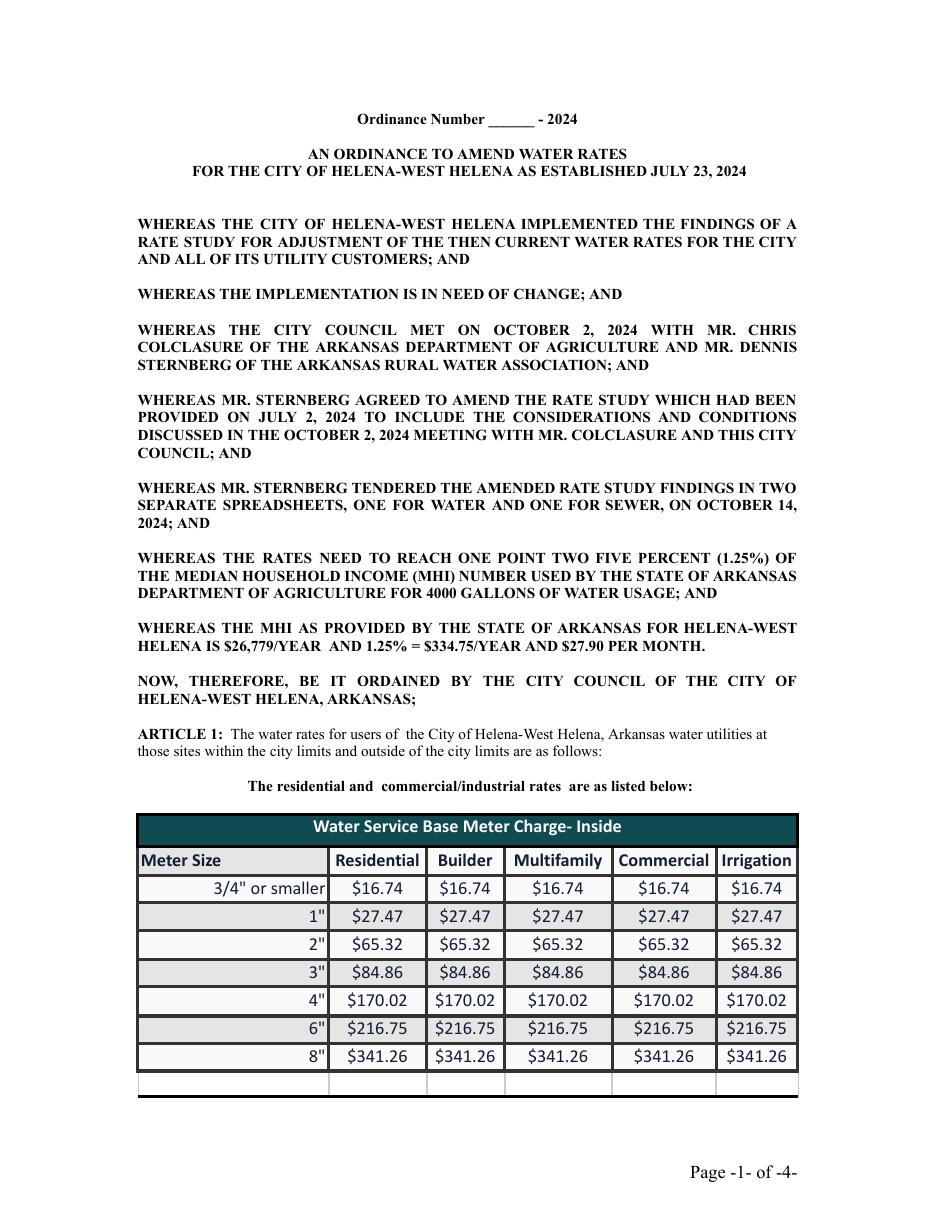
Sources: the city's own packet archive — the 10/29/2024 meeting folder (ordinance drafts) and the 11/19/2024 packet (passage minutes). One scrivener's note: the final-draft file's emergency clause reads "January 1, 2024," an evident typo; the minutes record the amendment as January 1, 2025.
Arkansas PSC Municipal utilities are not state-regulated — the rules are ours to write
— Arkansas Public Service Commission, Water Utilities page. No state rule limits estimated billing, back-billing, or late fees for a municipal system; only the city council can write those rules.
Peer city Bryant, Arkansas — Policy Governing Water Leakage Billing Adjustments (2022)
The full policy an Arkansas peer city already has on its books: one adjustment per 12 months, proof of repair, 50% credit on the leak month's water and sewer, no late fees on adjusted bills, monthly adjustment report to a public committee.
Donor rule Texas — 16 Tex. Admin. Code § 24.165 (Billing)
Texas's statewide billing rule for small water utilities — the estimated-read limit, back-billing cap, repayment plan, and one-time (non-compounding) late fee proposed above, already written.
Donor rule Florida — Fla. Admin. Code R. 25-30.350 (Underbillings and Overbillings)
Donor rule Pennsylvania — 52 Pa. Code § 56.12 (Meter reading; estimated billing)
The rule that puts the cost of the utility's unread meter on the utility, not the customer.
Full citations
- Mayor's Budget Amended 01-28-26 (City of Helena-West Helena), Water Department Income Statement, pp. 26–27 — from the city's public council-packet folder.
- Arkansas Legislative Audit, Helena-West Helena Municipal Water & Sewer System, Dec 31, 2023 — arklegaudit.gov
- Ark. Code Ann. § 14-42-108 — codes.findlaw.com/ar/title-14-local-government/ar-code-sect-14-42-108/
- Arkansas PSC, Water Utilities — apsc.arkansas.gov/utilities/water/
- City of Bryant, AR — Policy Governing Water Leakage Billing Adjustments — bryantar.gov/grab/agendas/uploads/agenda_212/updated_leak_adjustment_policy-docx.pdf
- 16 Tex. Admin. Code § 24.165 — law.cornell.edu/regulations/texas/16-Tex-Admin-Code-SS-24-165
- Fla. Admin. Code R. 25-30.350 — law.cornell.edu/regulations/florida/Fla-Admin-Code-Ann-R-25-30-350
- 52 Pa. Code § 56.12 — pacodeandbulletin.gov
- Central Arkansas Water, Leak Adjustment Policy — carkw.com/contact/leak-adjustment-policy/
- City of Russellville / City Corporation, Customer Information Handbook — citycorporation.com
- Philadelphia Water Dept., Homeowners Emergency Loan Program (HELP) — phila.gov
- City of Atlanta, Care & Conserve Plumbing Repair Program — atlantawatershed.org/care-and-conserve-plumbing-repair-program/
- Ordinance 16-2024 (water rates) — drafts and passage minutes from the city's public meeting-packet Drive archive (10-29-2024 and 11-19-2024 meeting folders).
- Council meeting recordings: City of Helena-West Helena YouTube channel — every timestamp above links to the moment in the video.
- My own billing records: 89 water bills, Dec 2019 – Aug 2026, account-level details withheld; meter-read chains verified.